
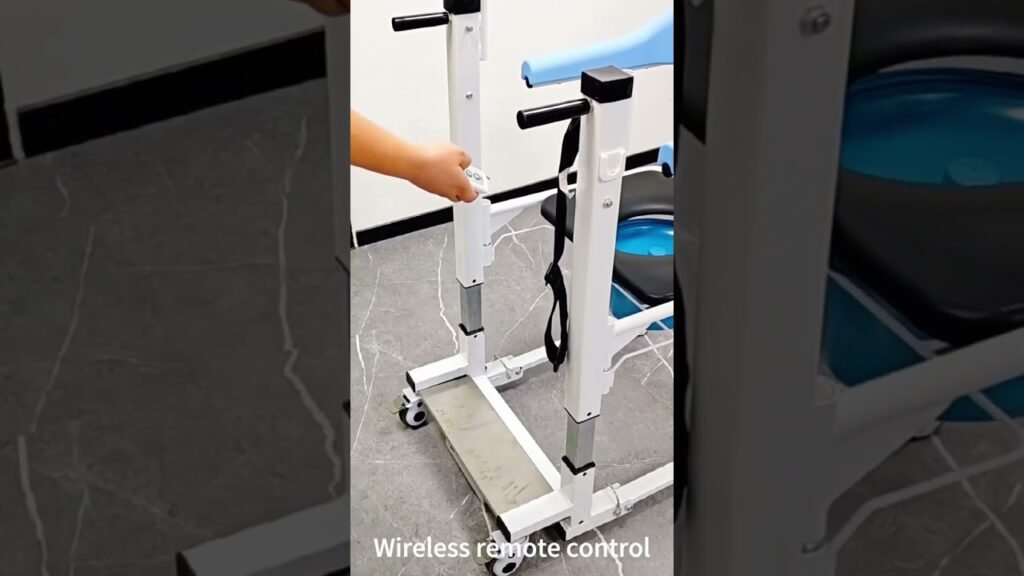
Foldable Electric Lift Chair: What the Video Shows
The foldable electric lift chair shown by DawnYiyang is presented as a portable mobility-assistance and standing-assistance device for elderly users, seniors, wheelchair users, and caregivers. The product demonstration appears at 0:00-0:12 in the original video. The short clip shows the product format, but it does not establish whether the chair is suitable for a particular person.
According to DawnYiyang, the design combines a portable frame with powered movement. However, the video does not publish measured lifting speed, motor noise, battery runtime, weight capacity, service life, or durability results. You should verify each specification with the manufacturer before purchase.
This article expands the visual demonstration with transfer procedures, home-access checks, cost questions, insurance guidance, and comparisons with a power lift recliner and floor lift chair. Those details matter for buyers because a chair may look practical yet fail to fit a doorway, wheelchair, user, or caregiver routine.

Key Takeaways for Buyers and Caregivers
The safest buying decision starts with five checks. First, confirm the user’s current weight, hip width, thigh depth, and trunk control. Second, measure doorways, hallways, transfer space, and the height of the wheelchair seat. Third, inspect the base, casters, handrails, contact points, and rear brakes.
Fourth, verify the rechargeable battery, charging time, replacement cost, and what happens during a power failure. Fifth, practise transfers before an emergency. A caregiver should know how to position the chair, stop the motor, and respond if the user slides or reports pain.
Do not confuse a lift-assist device with a fall-recovery device. A lift-assist chair raises a seated person toward standing. A floor lift chair may be designed for low-level transfers or recovery from the floor, but the manufacturer must document that function.
- Record the user’s weight and seated hip width.
- Measure the wheelchair, doorway, threshold, and transfer route.
- Ask the seller for written testing data and warranty terms.
- Have an occupational therapist, physiotherapist, or trained caregiver approve the transfer method.
As demonstrated in the video, the portable format is only the starting point. Safe use depends on the person, room, surface, and care plan.
How a Foldable Electric Lift Chair Works
A foldable electric lift chair normally uses an electric motor, remote control, rechargeable battery, and lifting mechanism. The motor changes the seat angle or height. A reclining function changes posture, but it may not raise a person far enough for a safe standing transfer. The video’s 12-second demonstration supports discussion of this product format, not a claim about every internal component.
Common comfort and support features include an ergonomic backrest, PU cushion, arm-supported handrails, and safety seat belts. These features have different purposes. The cushion supports pressure distribution, the backrest supports posture, and the belt helps with positioning. None replaces clinical supervision for someone with poor trunk control.
- Place the chair on a level surface beside the wheelchair or bed.
- Apply both rear brakes and check that the base is stable.
- Help the user sit centrally, keeping feet and clothing clear.
- Fasten the belt when clinically appropriate.
- Use the remote to raise or recline gradually.
- Stop if alignment changes, pain appears, or the user begins to slide.
The electric motor may operate slowly, and the battery may affect performance. Confirm noise, lift speed, maximum duty cycle, and charging requirements with the manufacturer.

Traditional Power Lift Recliner vs Portable Floor Lift Chair
A fixed power lift recliner usually weighs more and resembles ordinary living-room furniture. A portable foldable electric lift chair can suit an apartment, guest room, vehicle, or home where a wheelchair and chair must share limited space. The video at 0:00-0:12 is the source for the portable product format, not proof of a floor-recovery function.
| Feature | Fixed power lift recliner | Portable foldable model | Floor lift chair |
|---|---|---|---|
| Lifting height | Usually seated to standing | Varies; verify raised seat height | May start near floor level |
| Reclining comfort | Usually strongest | Often secondary to portability | Depends on design |
| Portability | Low | Higher, but confirm folded weight | Varies |
| Transfer position | Raised seat | Raised or mobile seat | Low-level or floor transfer |
| Battery dependence | Often mains powered with backup | Commonly rechargeable | Varies |
Choose a fixed recliner for daily comfort and stable placement. Choose the portable design for transport and narrow spaces. Choose a dedicated floor lift only when an occupational therapist confirms that fall-recovery needs exist and the manufacturer documents the function.
Safety Features That Matter During Transfers
Before buying a foldable electric lift chair, inspect the T-stabilized base, wheels and casters, handrails, safety seat belts, rear brakes, non-slip contact points, and centre of gravity. A wide base may improve stability, but it can also require more floor space. The product shown by DawnYiyang suggests a mobile format, so brake access and surface conditions deserve special attention.
Use this caregiver checklist every time:
- Set the chair on a level, dry, unobstructed surface.
- Lock both rear brakes.
- Move casters clear of thresholds, rugs, and furniture.
- Keep fingers, feet, belts, and clothing away from moving parts.
- Support the user’s trunk and follow the approved transfer method.
- Stop immediately if the person slides, feels pain, or loses balance.
A seat belt is a positioning aid, not a substitute for a restraint assessment. Users with dementia, spasms, reduced sensation, or weak trunk control may need professional guidance. Keep the remote within reach, learn the emergency stop method, and never force the mechanism by hand.
After a serious fall, head impact, chest pain, severe pain, or suspected fracture, call emergency services. Do not drag or manually lift the person with the chair.

Choosing Size, Weight Capacity, and Transfer Height
Weight capacity is not a suggestion. Compare the published limit with the user’s body weight, clothing, transfer board, cushion, and movement forces. A chair rated only slightly above the user’s weight leaves little practical margin. Ask the seller to confirm capacity and dimensions in writing.
Fit depends on more than weight. Measure seat width, seat depth, seat-to-floor height, armrest height, backrest height, and the space needed for a wheelchair or walker. Body size affects the centre of gravity. A chair can meet its advertised capacity and still be unsafe if the seat is too wide, shallow, or low.
- Measure hip width while the user sits normally.
- Measure from the back of the knee to the backrest for thigh depth.
- Check that both feet rest flat without pressure behind the knees.
- Measure the wheelchair seat height.
- Confirm that the raised chair aligns with the wheelchair transfer surface.
- Allow room for the caregiver’s feet and hands.
For example, a 2-inch mismatch between transfer surfaces may force the user to slide or lift their body. That small difference can change stability. Test the chair with the intended cushion and footwear, not only with an empty seat.
Portability and Accessibility in Real Homes
The foldable frame is useful only if you can move and store it safely. Check total product weight, carrying points, wheels and casters, folded dimensions, and whether one caregiver can load it without twisting. The video at 0:00-0:12 supports the portable form, but it does not provide exact folded measurements.
Before delivery, measure the narrowest doorway, elevator entrance, hallway turning area, threshold height, bathroom route, and space beside the bed or sofa. A chair that passes through a doorway may still fail at a 90-degree hallway turn. Wheelchair users also need clearance for the chair, wheelchair footrests, and caregiver position.
Floor surfaces affect rolling and braking. Carpet can restrict casters. Thick rugs may catch wheels. Wet tile can reduce traction. A threshold can cause a sudden stop or tipping movement. Use a level, dry surface whenever possible.
- Tape the expected chair footprint on the floor.
- Place the wheelchair beside the taped area.
- Rehearse the transfer route without the user first.
- Check that the caregiver can reach the rear brakes and remote.
- Confirm that no door, rug, or furniture blocks the lift path.
In practical home-care experience, this rehearsal often reveals problems that product photographs cannot show.
Testing Speed, Noise, Battery Life, and Durability
The DawnYiyang video is a visual demonstration only. It does not show measured lift speed, sound level, battery life, or long-term durability. Before relying on a foldable electric lift chair for daily transfers, use an independent testing plan or request documented results.
Record five full lift cycles under the user’s normal load. Time each cycle with a phone. Measure sound from about metre away in a quiet room. Record the battery percentage before and after repeated cycles. Watch for slower movement, heat, frame movement, caster wobble, brake slip, cushion compression, or unusual noise.
| Date | Load | Cycle | Time | Noise | Battery |
|---|---|---|---|---|---|
| Record | User load | 1-5 | Seconds | dB if available | Percent |
Ask the manufacturer for four concrete data points:
- Lifting speed or full-cycle time.
- Motor noise rating and the test method.
- Battery capacity and expected cycles per charge.
- Rated service life, repair access, and warranty coverage.
One demonstration cannot reveal heat buildup or performance at low battery. Seek independent reviews, a clear return policy, and replacement-part information before purchase.
Care, Charging, and Total Ownership Cost
Routine care protects both safety and cost. If the chair has waterproof construction or water-resistant upholstery, wipe spills promptly and use only the approved cleaner. Keep liquid away from the electric motor, controls, seams, and charging port. Never hose or immerse the chair unless the manual expressly permits it.
Inspect belts, buckles, casters, frame joints, and brakes weekly. Check for loose fasteners, cracked PU cushion material, uneven rolling, and belt damage. Charge with the supplied charger in a dry, ventilated area. Inspect cables for heat, cuts, or crushed sections. Follow the manual’s rules about extension cords.
Total ownership cost includes more than the purchase price:
- Delivery, assembly, and possible home modifications.
- Replacement battery and charger costs.
- Warranty extensions, maintenance, and accessories.
- Rental fees during repair or recovery.
- Return shipping if the chair does not fit.
Medicare commonly covers medically necessary durable medical equipment under specific rules, but lift chairs may be treated differently from the lifting mechanism. Coverage varies by plan. Ask your clinician, Medicare Advantage plan, insurer, and supplier for written eligibility and billing details. Start with official Medicare coverage guidance. Keep a backup transfer plan for an empty battery or failed motor.
Who Should Use One—and When It Is Not Enough
A foldable electric lift chair may help seniors with leg weakness, people recovering from surgery, wheelchair users completing seated transfers, and caregivers assisting someone who can follow instructions. The user usually needs enough trunk control to remain aligned while the chair moves.
Professional assessment is needed after repeated falls, severe balance loss, inability to bear weight, contractures, confusion, uncontrolled movements, pressure-injury risk, or a body size outside the published dimensions. A clinician should also assess whether the chair’s transfer height matches the wheelchair, bed, or toilet.
Standing assistance and fall recovery are different tasks. If someone is already on the floor, do not drag or manually lift them with a lift chair. Check breathing and injury signs. Call emergency help after a head impact, severe pain, suspected fracture, chest pain, or loss of consciousness. Otherwise, follow a clinically approved fall-recovery method.
The creator demonstrates the product format, but clinical suitability depends on strength, cognition, environment, and the care plan. Arrange training with an occupational therapist, physiotherapist, or qualified mobility-equipment specialist. Practise when everyone is calm, not during the first emergency.
Foldable Electric Lift Chair: Final Buying Decision
The video from DawnYiyang gives you a useful visual starting point: a portable electric chair intended to support seated mobility and standing assistance. It does not prove capacity, battery range, durability, floor recovery, or clinical suitability. Those questions require written specifications, measurements, and a safe trial.
Before you buy a foldable electric lift chair, measure the user and the home. Confirm a meaningful weight margin, matching transfer height, accessible brakes, and enough room for the wheelchair and caregiver. Then test five lift cycles, review charging instructions, and ask who will repair the motor or replace the battery.
Your next steps are simple:
- Ask the manufacturer for dimensions, capacity, speed, noise, battery, and warranty data.
- Measure every doorway, threshold, turning area, and transfer surface.
- Have a qualified clinician approve the transfer method.
- Rehearse normal and battery-failure procedures with the caregiver.
- Buy only when the return and service arrangements are clear.
The best chair is not the one with the most features. It is the one that fits the user, the room, the caregiver, and the documented care plan.

Key Takeaways
- Confirm the user’s weight, hip width, thigh depth, trunk control, and the chair’s written weight capacity before ordering.
- Measure doorways, thresholds, turning areas, wheelchair height, and caregiver space; portable does not mean universally accessible.
- Inspect the T-stabilized base, handrails, seat belt, casters, non-slip points, and both rear brakes before every transfer.
- Verify lift speed, noise, battery capacity, charging time, replacement parts, warranty, and return terms instead of relying on a short demonstration.
- Practise transfers and battery-failure procedures with a trained caregiver or clinician before the chair is needed urgently.
Frequently Asked Questions
What is the best lift chair recliner on the market?
There is no single best lift chair recliner for every user. Choose the model with verified weight capacity, suitable seat dimensions, stable brakes, the correct transfer height, dependable battery or power backup, a strong warranty, and a practical return policy.
Will Medicare pay for a lift chair for a senior?
Medicare coverage is not automatic and may apply differently to the powered lifting mechanism, complete chair, or rental arrangement. Ask your clinician, Medicare Advantage plan, insurer, and supplier for a written eligibility and billing decision before purchasing.
What is the best lift chair for elderly consumer reports?
Compare independent results for lift speed, noise, stability, battery life, durability, comfort, repair access, and warranty terms. Do not rely only on star ratings or a short promotional demonstration, because those sources may not test the chair with a real user load.
Does Costco sell lift chairs for elderly people?
Costco may offer lift chairs or related mobility products, but inventory varies by region and season. Check the current Costco website or local warehouse, then compare delivery, assembly, return rules, and after-sale service.
Can a foldable electric lift chair lift someone from the floor?
Not necessarily. A lift-assist chair usually raises a seated person toward standing, while a floor lift chair may be designed for low-level transfers or fall recovery. Never assume floor recovery is supported unless the manufacturer documents it and a qualified clinician approves the method.
