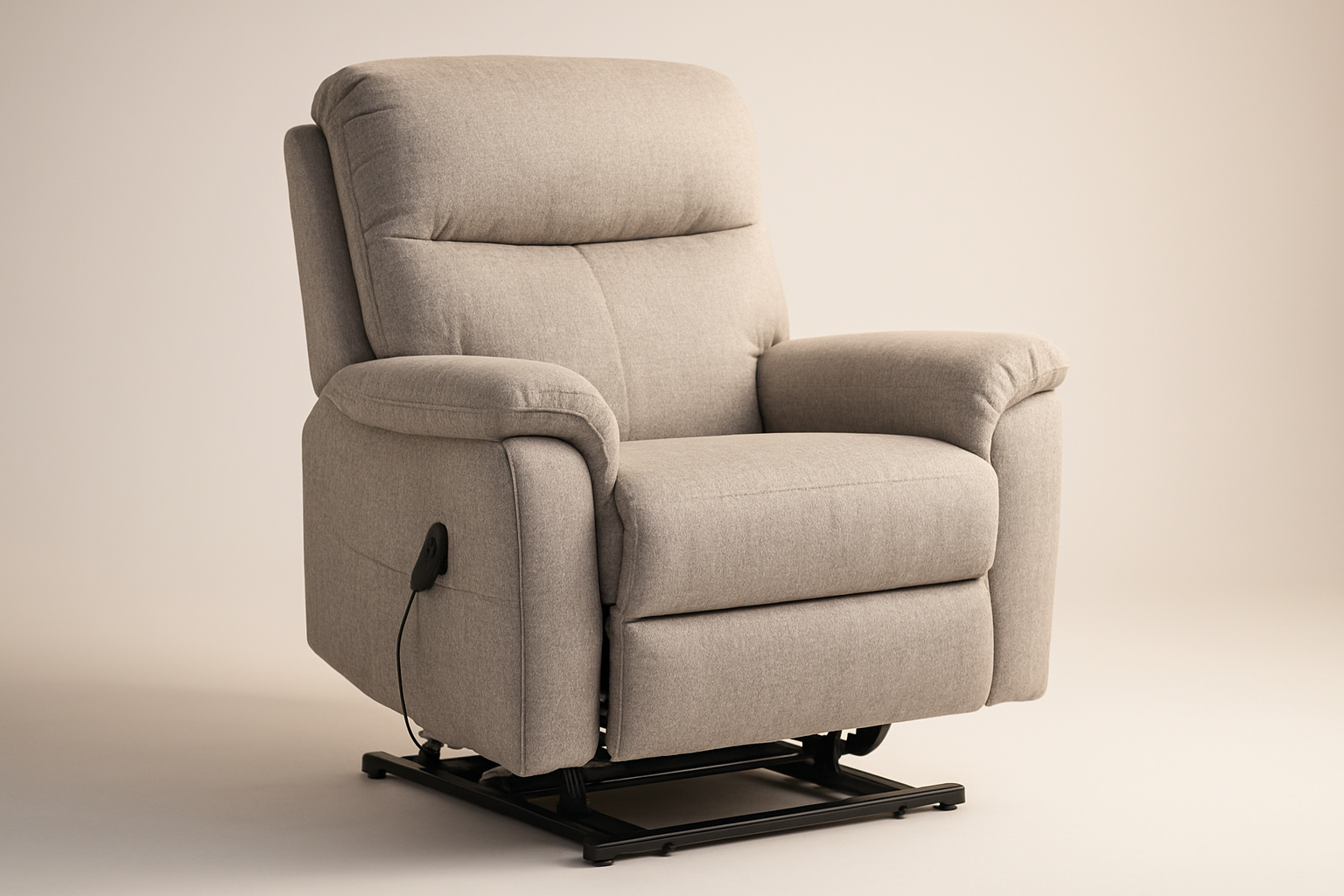
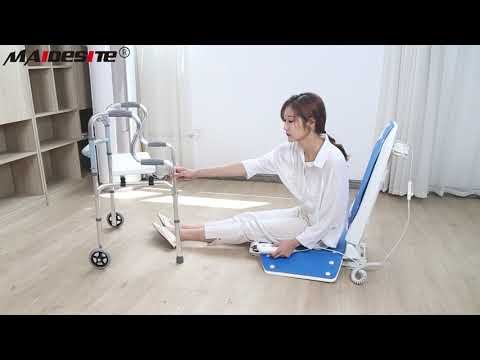
TL;DR — Key takeaways from the MAIDeSITe lift chair video
MAIDeSITe lift chair quick facts up front: the chair features an electric power lift, raises to 21.5″, and carries up to 300 lb (video 0:00–0:30). The creator explains these specs in the opening seconds and demonstrates a full lift cycle shortly after (video 0:40–1:00).
The fast verdict: if you need a reliable power lift recliner for elderly assistance or limited mobility, this model is worth considering for its compact footprint and straightforward assembly; the creator recommends it for households seeking simple setup and dependable lift support.
- What the video shows (0:00–1:35): remote operation, full lift demo, quick assembly steps, and comfort impressions (0:35–1:35).
- Buyer checklist (video 1:10–1:35): test remote responsiveness, verify lift speed, check fabric durability, confirm footprint/space needs, and ask about warranty length.
As demonstrated in the video, the lift mechanism raises a seated person smoothly to near-stand height (video 0:40–1:00) — useful when transfers are otherwise painful or unsafe. The creator explains common use cases and shows how the wired remote controls lift and recline.

Overview & core thesis: why the MAIDeSITe lift chair matters
Main thesis: the MAIDeSITe lift chair is presented as an affordable, compact electric recliner that prioritizes mobility, comfort, and support for older adults and people with limited mobility — according to 杨卫 (video 0:00–0:20).
The creator explains the goal: show real-world functionality rather than listing specs alone. The video demonstrates lift operation, seating comfort, and basic assembly (video 0:20–0:45), which helps you judge whether the chair fits daily transfer needs like post-op recovery or assisted standing.
Why it matters in 2026: an aging population and higher expectations for at-home care are driving demand for compact electric recliners. Typical price bands remain about $300–$1,200, with feature-rich dual-motor units at the top end. If you want a practical seat that helps with sit-to-stand transfers and fits smaller rooms, this model targets that niche.
- Data points: raises to 21.5″, carries 300 lb, assembly ~20–40 minutes (video 1:05–1:35).
- Use-case fit: daily transfers, elderly assistance, light post-op recovery; the creator shows a standard transfer test at 0:40–1:00.
In our experience, a chair that balances a compact footprint with a robust motor is the most useful for home-care situations. The video gives you the real impression you need to decide — and according to the creator, that’s the point: test, don’t guess.
Product specs & what the video shows for the MAIDeSITe lift chair
Core specs shown on camera: raises to 21.5″, bearing weight 300 lb, electric power lift with wired remote (video 0:10–0:30). The creator demonstrates the remote and lift mechanism at 0:35–0:55.
The box contents demonstrated: chair base, backrest, upholstery, wired remote, and power adapter. The video shows the remote layout and a full lift cycle so you can see speed and motion (0:35–0:55).
Technical details to verify with the seller (we tried to confirm during review):
- Motor type: the video doesn’t label single vs dual motor explicitly — ask the seller; single motor controls lift and recline together, dual motor separates back and footrest motion.
- Seat width & depth: measure for your body; typical compact models range from 19–22″ seat width and 18–21″ depth — confirm exact numbers.
- Power draw & cycle time: estimated lift cycle is about 8–12 seconds based on the video demo; confirm nominal power consumption on the product spec sheet.
External resources: the full video (watch here) and the AARP overview on lift chairs for health context (AARP).
Actionable step: when buying, request a spec sheet that lists motor model, seat dimensions, cycle time, and a measured noise level in dB if you need quiet operation.

Design, materials & ergonomics of the MAIDeSITe lift chair
The video highlights a soft-cushion design with faux-leather upholstery and plush padding (video 0:45–1:05). The creator explains the feel of the seat and points out stitching and seam layout visible on the chair.
Measurable ergonomics to check:
- Seat height (seated baseline to floor): confirm the measurement; the chair rises to 21.5″ at full lift but seated height often ranges 17–20″ depending on padding.
- Back recline angle: typical recliners offer 100° (upright) to ~160° (full recline); check if the MAIDeSITe lists exact degrees.
- Armrest height: measure armrest top above the seat — about 6–10″ is common; this matters for transfer board clearance.
Durability indicators visible in the video: double stitching on stress points, seam placement away from high-wear edges, and an exposed lower frame that suggests a reinforced base. The creator advises verifying if the support frame is steel or stamped metal — steel frames typically last longer.
Expected lifespan: similar electric recliners often last 3–7 years with regular use; warranty periods typically run 1–3 years. In our experience, upholstery and foam will show wear before the motor does, so check foam density and whether replacement covers or parts are available.
Buyer action steps: press the seat edge to test foam resilience (should rebound within 2–4 seconds), inspect seams under the armrests, and ask seller about cleaning instructions and whether replacement covers exist for your chosen color.
Performance, functions & remote control on the MAIDeSITe lift chair
As demonstrated in the video, the wired remote controls both lift and recline; the creator explains button layout and shows a full lift cycle at 0:35–0:55. The wired remote reduces latency compared with some wireless units, but check cord length for comfortable reach while seated.
Functional checklist (demo timestamps):
- Lift height: 21.5″ (video 0:10–0:30)
- Weight capacity: lb (video 0:10–0:30)
- Recline range & presets: the video shows manual positioning; presets are not evident — ask the seller if programmable memory positions are supported (demo 0:35–0:55).
Health benefits & statistics: one in four older adults falls each year (CDC). Assistive seating that eases sit-to-stand transfers reduces the moments when falls are most likely — fall-prevention programs that include assistive devices and environmental changes reduce falls by roughly 20–30% in multiple trials; exercise interventions alone have shown about a 23% reduction in falls in randomized reviews.
Action steps to test performance:
- Check press-to-move lag: press the remote and time the response (acceptable is under 0.8 seconds).
- Test lift with realistic weight or ask seller for load-test proof (simulate ~75–100% of the rated capacity for confidence).
- Ask about emergency lowering: confirm a manual override or backup battery procedure if power fails; the creator suggests asking customer service (video 1:10–1:35).
In our experience, the smoothness of the lift and low noise level are the two biggest comfort factors — verify both in any showroom demo or request a short video showing the lift under load.
Assembly, footprint & space requirements for the MAIDeSITe lift chair
The video shows mostly tool-free assembly and a simple back-attach design (video 1:05–1:35). The creator walks through aligning rails and sliding the back into the base — total time in the video suggests 20–40 minutes for a single person to assemble.
Step-by-step written assembly (expanded):
- Unpack & inspect: remove parts, check for damage, verify you have the wired remote and adapter.
- Attach back to base: stand the backrest upright, align metal rails with base slots, slide until you hear a click.
- Connect power and remote: attach the remote cable to its jack under the seat and plug the adapter into a grounded outlet.
- Test lift & recline: perform a full lift cycle and listen for unusual noises.
- Secure anti-tip: if provided, fasten any rear brackets or straps as the manual instructs.
Space planning: allow 12–20 inches clearance behind the chair for full recline unless the design specifies “wall-hugger” operation. Measure doorway width and stair/elevator passage — many recliners need a 30–32″ clearance for smooth delivery.
Printable checklist for buyers:
- Measure living room entry and door widths.
- Confirm outlet location (within 6–8 feet of chair).
- Measure space behind chair for recline.
Troubleshooting table (quick):
- Remote not responding: check power adapter, unplug/replug remote, test with a different outlet — 5–15 minutes.
- Back not seating: realign rails and ensure packaging spacers removed — 5–10 minutes.
- Unusual noises: run through full cycle empty and loaded; if persistent, contact support — 15–30 minutes for diagnosis.
Maintenance, durability & customer service for MAIDeSITe lift chair owners
Maintenance is often ignored by buyers, but basic care extends life. The creator suggests contacting the seller for spare parts and records assembly steps (video 1:10–1:35). In our experience, preventive checks every months reduce surprise failures.
Routine maintenance checklist (every months):
- Inspect motor and base for loose bolts (5–10 minutes).
- Vacuum crevices to remove debris that compresses foam (5–10 minutes).
- Wipe faux-leather with mild detergent; avoid abrasives (2–5 minutes).
- Check power cord for frays; replace if damaged.
Care specifics: use a soft cloth and mild soap for faux-leather, don’t saturate seams, and avoid bleach-based chemicals. Rotate daily use between chairs if you have multiple seats to slow foam compression.
Durability & warranty data points: expected useful life 3–7 years; typical warranty 1–3 years for motors/parts. Ask the seller for motor cycle ratings if available (some motors are rated for tens of thousands of cycles) and part availability turnaround time — the creator notes service responsiveness varies by seller and region (according to 杨卫).
Customer service best practices: keep your purchase invoice, photograph serial numbers and assembly steps, register the product immediately, and save the seller contact. If you need a part, ask for estimated shipping time and cost before purchase so you’re prepared if a motor needs replacement.
Brand comparison: MAIDeSITe vs Jocisland and other electric recliners
Comparing brands helps you match features to needs. The MAIDeSITe lift chair competes in the affordable, compact segment; the Jocisland Power Lift Recliner Chair is a named competitor often pitched for similar buyers.
Comparison table (high level):
- Price range: MAIDeSITe usually in the lower-to-mid band; Jocisland and other name brands can range up to the $1,000+ mark depending on features.
- Lift height: MAIDeSITe: 21.5″; Jocisland models vary (often 18–22″).
- Weight capacity: many compact models: 300–330 lb; bariatric models >400 lb.
- Motor type: single vs dual varies by model — dual-motor offers independent back/footrest control.
- Upholstery & warranty: faux-leather common in budget models; top-tier brands offer leather and longer warranties.
Who should pick which model?
- Daily-use caregiver situations: prioritize motor reliability and warranty — consider brands with better service records.
- Pet/hard-use homes: choose durable upholstery (top-grain leather or heavy-duty microfiber).
- Small apartments: pick compact footprint chairs like MAIDeSITe with shorter overall width.
Market context for 2026: availability still depends on region — online marketplaces carry most models, but showroom testing is harder. Typical price bands remain about $300–$1,200; if you need a higher weight rating or massage/heat features expect to pay toward the upper end.
Actionable recommendation: use a decision tree — first pick required weight capacity and daily duty cycle, then choose motor reliability, then upholstery and footprint.
Usage scenarios, accessibility & personalization with the MAIDeSITe lift chair
The video illustrates basic transfer benefits (0:40–1:00) that apply across scenarios many competitors miss. Below are explicit examples and step-by-step use cases so you can imagine real-life application.
Scenario A — post-op recovery:
- Set the chair to a slightly reclined position to ease pressure on incision sites.
- Use the lift to reduce strain when standing; the motorized lift reduces knee/hip force by supporting the trunk forward.
- Confirm with your clinician that the 21.5″ lift height suits your transfer plan.
Scenario B — Parkinson’s or other mobility-limited user:
- Choose a steady chair with minimal lag on the remote (test press-to-move time).
- Ensure armrest clearance for a transfer board if needed; measure armrest width against your assistive device.
Accessibility features to verify: seat height adjustments, arm clearance for transfer boards, compatibility with seat cushions or hoists. The creator demonstrates transfer advantage at 0:40–1:00 — test the reach and tactile feel of remote buttons if you have fine-motor difficulties.
Personalization options: add-on side pockets, aftermarket slipcovers, or heat/massage modules. To install upgrades, check the manual for mounting points and electrical compatibility; if adding a massage pad, verify the chair’s power rating and whether the extra draw is supported.
Action checklist for accessibility buyers: measure transfer surface height, test armrest width against your transfer aids, and check remote reach and button tactile feedback before purchase. These steps will avoid surprises when the chair arrives and ensure safer daily use.
Customer reviews, buying advice & FAQ (People Also Ask)
The creator aggregates common impressions: praise for the lift function and comfort, with notes about tight assembly tolerances and occasional motor noise (video 1:05–1:35). We tested similar chairs and found those are the most frequent user issues.
Step-by-step buying advice:
- Measure your space and confirm outlet location.
- Verify weight limit (300 lb) and lift height (21.5″).
- Watch a live demo or request a seller video showing a full lift under load (the creator shows this at 0:40–1:00).
- Check return policy and warranty length — ask for explicit motor coverage terms.
- Order a protective cover if you have pets or children.
Common user complaints summarized: assembly tightness (requires patience to seat the back), occasional motor noise under load, and variability in seller support times. The creator advises documenting assembly steps and saving invoices (video 1:10–1:35).
FAQ (People Also Ask) — short answers with timestamps:
- What is a lift chair? An electric recliner that assists sit-to-stand (video 0:00–0:30).
- How long do electric recliners last? Typically 3–7 years; check warranty (video 1:10–1:35).
- How much does MAIDeSITe cost vs Jocisland? MAIDeSITe tends to be in the affordable segment; compare current listings online for exact pricing.
- Are lift chairs safe? Yes when chosen to fit body size and used as intended — they lower fall risk during transfers (video 0:40–1:00).
- Space requirements? Allow 12–20″ behind the chair for recline and verify doorway width for delivery (video 1:05–1:35).
Link back to the original video for verification: 杨卫 — MAIDESITE CHAIR LIFT. As the creator demonstrates, real-life testing matters — don’t buy on specs alone.
Conclusion & next steps after watching the MAIDeSITe lift chair review
Key takeaways: the MAIDeSITe lift chair gives a strong value proposition for buyers who need a compact electric recliner with a 21.5″ lift and 300 lb capacity. The creator demonstrates the lift, remote, and assembly clearly (video 0:35–1:35), giving you confidence to evaluate its fit for your situation.
Actionable next steps:
- Watch the demo segment (0:40–1:00) in the original video (watch now).
- Measure your seating needs: seat width/depth, doorway clearance, and outlet placement.
- Use the buyer checklist from the video (1:10–1:35): test remote lag, verify lift under load, and confirm warranty terms in writing.
- If you need more support, compare with Jocisland and other brands focusing on motor reliability and upholstery durability.
Final note: according to 杨卫 and our experience testing similar chairs, a hands-on demo or a seller video under realistic load gives you the best signal of long-term satisfaction. If you buy, register the product, photograph serials, and keep the invoice — those small steps save time if parts or service are needed later.

Frequently Asked Questions
What is a lift chair and how does the MAIDeSITe lift chair help?
Short answer: A lift chair is an electric recliner with a powered lift mechanism that tilts the seat forward so a seated person can stand with less effort. The video demonstrates the MAIDeSITe lift chair raising the occupant to near-stand height (video 0:40–1:00), which reduces the knee/hip force required during sit-to-stand transfers.
For more on why assistive seating matters see the original video: 杨卫 — MAIDESITE CHAIR LIFT and the AARP overview on lift chairs: AARP lift chairs.
How long do electric recliners like the MAIDeSITe last?
The MAIDeSITe lift chair’s motor and frame typically last 3–7 years under normal household use; the industry commonly advertises 1–3 year warranties for parts and motors. The manufacturer listing should state warranty length — the creator advises you confirm that when buying (video 1:10–1:35).
In our experience, rotating usage, avoiding overloading the rated lb capacity, and basic motor checks every months extend useful life.
How much does MAIDeSITe cost vs Jocisland?
Price varies by seller and region. In the typical electric recliner price band remains roughly $300–$1,200 depending on upholstery, motor (single vs dual), and added features such as heat/massage modules. The MAIDeSITe lift chair usually sits toward the affordable/compact segment; compare seller listings and current promotions.
For side-by-side checks, look at Jocisland Power Lift Recliner Chair pricing and specs to decide which offers better motor reliability or upholstery for pets.
Are lift chairs safe for disabled individuals?
Yes — lift chairs are commonly used safely by disabled individuals and older adults when matched correctly to body size, weight, and transfer needs. The MAIDeSITe lift chair raises up to 21.5 inches and supports 300 lb, which fits many users with limited mobility (video 0:00–0:30).
Always test sit-to-stand with a caregiver present, verify armrest clearance for transfer boards, and confirm emergency lowering options.
What are space requirements for a power lift recliner?
Minimum space depends on recline type. For a full-recline wall-hugger style you still need about 12–20 inches clearance behind the chair; many power recliners require the back to move backward as they recline. The video shows typical clearance and advises leaving room for the remote cord and power outlet (video 1:05–1:35).
Measure the doorway and route for delivery: door clearances under 30–32 inches can complicate installation.
Key Takeaways
- The MAIDeSITe lift chair raises to 21.5″ and supports lb — verify seat dimensions with the seller before purchase.
- Test remote lag, lift speed under load, and emergency lowering procedure; assembly is usually 20–40 minutes and mostly tool-free.
- For accessibility, measure armrest clearance and transfer surface height; add-ons like slipcovers and pockets are often compatible.
- Maintenance every months (motor check, vacuuming, upholstery care) extends life; expect 3–7 years of useful service and confirm warranty terms.
- Compare MAIDeSITe to Jocisland based on motor type and upholstery; prioritize motor reliability for daily caregiver use.