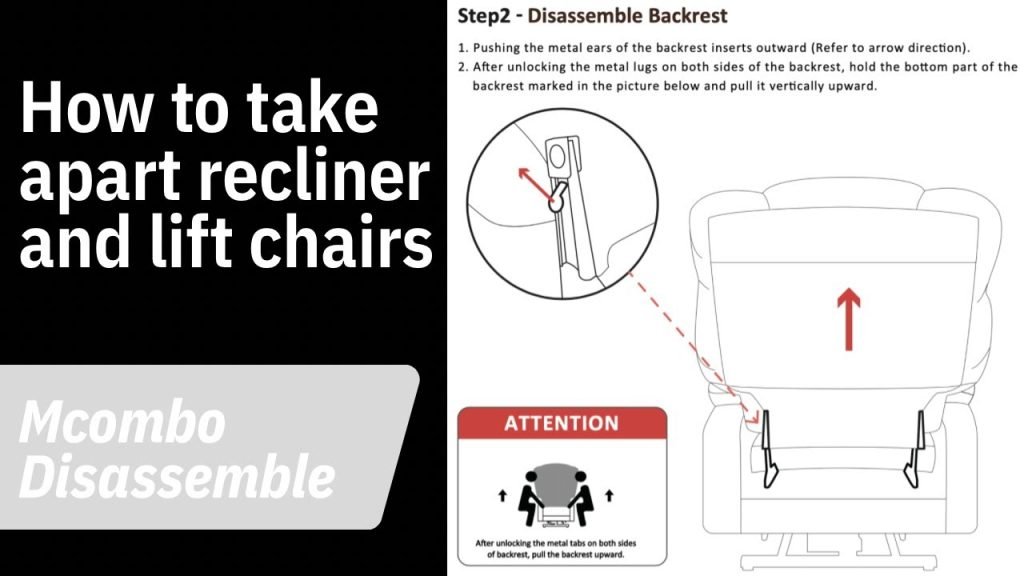
The Mcombo Guide to Taking Apart Recliner Chairs and Lift Chairs gives you straightforward, step-by-step instructions paired with a Video By Mcombo so you can follow along visually.
You’ll find clear lists of tools, safety tips for removing upholstery and mechanisms, and simple organization methods to keep parts labeled for easy reassembly; the Mcombo- How to take apart recliner chairs and lift chairs video by Mcombo reinforces each step so you can work confidently.

Planning the Disassembly Project
Before you begin taking a recliner or lift chair apart, set a clear plan so the work stays organized, safe, and efficient. A bit of upfront planning will save you time and prevent mistakes that are hard to undo once upholstery and mechanisms are removed.
Choose a clean, well-lit, ventilated workspace with room to lay out parts
Pick a workspace with good lighting and ventilation where you can spread parts out safely; a garage, workshop, or a large cleared room works well. You should have enough floor space to lay out cushions, panels, and hardware in a logical sequence so nothing gets lost or contaminated with dust and debris.
Estimate time and set aside uninterrupted blocks for complex steps
Estimate how long each major phase will take and block off uninterrupted time for complex steps like removing motors or springs. Breaking the job into sessions makes it manageable, but try to avoid stopping mid-step when components are partially disassembled and under tension.
Assess your mechanical and electrical skill level and whether you need assistance
Be honest about your comfort with mechanical and electrical work. If you’re unsure about wiring, motors, or structural repairs, line up a helper or a professional before you start. Knowing your limits will help you decide which tasks to tackle yourself and which to delegate.
Gather model and serial numbers for reference and manuals
Locate and record the chair’s model and serial numbers before you disassemble anything; these details help you find schematics, parts lists, or service manuals. Keep that information with your photos and notes so you can reference it if you need replacement parts or technical instructions.
Watch the Mcombo video to understand the full process and identify model-specific tips
Watch the Mcombo video titled “How to take apart recliner chairs and lift chairs” to get a visual overview of the full process and spot model-specific differences. The video will give you practical cues about common fastener locations, typical wiring arrangements, and tips that save time and prevent damage.
Tools and Supplies
Having the right tools and supplies ready before you start will make disassembly smoother and reduce the chance of damaging fasteners, upholstery, or mechanisms. Lay out everything in your workspace and check tools for condition and battery charge.
Basic hand tools: screwdrivers, pliers, adjustable wrench, Allen keys
Have a set of screwdrivers (flat and Phillips), various pliers, an adjustable wrench, and a set of Allen keys on hand. These simple tools handle most fasteners and small adjustments during removal of panels, frames, and trim.
Power tools: cordless drill with bits, impact driver (optional)
A cordless drill with a selection of bits speeds removal of screws and bolts; an impact driver can be useful for stubborn fasteners but use it carefully to avoid stripping heads. Use low torque for sensitive areas and keep spare bits nearby.
Electrical tools: multimeter, wire cutters/strippers, test leads
If you’ll disconnect motors or control boxes, bring a quality multimeter, wire cutters and strippers, and insulated test leads. These let you verify that power is off, test continuity, and label wiring properly so you can reconnect components safely.
Fastener and fastening tools: staple remover, hog ring pliers, staples, hog rings
Upholstery fasteners require a staple remover and hog ring pliers; stock up on replacement staples and hog rings if you plan to reassemble the upholstery. Using the right removal tools reduces fabric damage and keeps reassembly clean.
Organization supplies: labeled bags, masking tape, permanent marker, magnetic tray
Keep labeled resealable bags, masking tape, and a permanent marker to organize hardware, and use a magnetic tray for screws and small metal parts. Clear labeling and containment prevent confusion and missing pieces during reassembly.
Personal protective equipment: safety glasses, work gloves, dust mask, knee pads
Protect yourself with safety glasses, work gloves, and a dust mask for insulation or foam dust exposure; knee pads help if you’ll be crouched for long periods. PPE reduces injury risk from staples, sharp edges, and airborne particles.

Safety Precautions
Safety is paramount when disassembling chairs because you’ll encounter electrical components, tensioned springs, sharp edges, and heavy parts. Follow simple precautions and respect the hazards at every step.
Unplug the chair and disconnect power before starting any work
Always unplug the chair from mains power and verify it is not live before touching wiring or motors. Assume the equipment is energized until you confirm otherwise with a meter, and treat all connectors carefully.
Remove or isolate batteries and follow battery safety guidelines
If the chair has a battery backup or internal battery, remove it and follow battery safety rules: avoid shorting terminals, store batteries in a safe place, and dispose of damaged batteries according to local regulations. Batteries can deliver high current and cause fires if mishandled.
Wear PPE to protect against staples, sharp edges, and dust
Wear safety glasses, gloves, and a dust mask to protect from staples, exposed metal edges, and foam dust. Upholstery springs and broken wood can present unexpected hazards, so PPE reduces the chance of cuts and inhalation.
Use safe lifting techniques and get help for heavy sections
Use proper lifting techniques and get assistance for heavy frames or recliner sections to avoid back injuries. If you need to move a fully assembled or partially disassembled chair, use a dolly and team lifting when possible.
Beware of tensioned springs and recliner mechanisms — release tension slowly
Many recliner springs and mechanisms are under high tension; release that tension slowly and deliberately to avoid sudden releases that can cause injury or damage. Take photos of spring orientations before removal to aid reassembly and avoid surprises.
Avoid working on wet or conductive surfaces when disassembling electrical parts
Keep electrical components away from wet or conductive surfaces and avoid standing on wet floors while working with wiring. A dry, insulated work area reduces the risk of shock and short circuits.
Identifying Recliner and Lift Chair Types
Knowing the type of chair you’re working on helps you anticipate mechanisms, fasteners, and electrical systems so you can plan the correct disassembly approach.
Differentiate manual recliners from power recliners
Manual recliners use mechanical levers, pull straps, or push-back motion and lack motors, while power recliners use motors and control boxes. You’ll handle springs and frame disassembly more often on manual models, and wiring and motor mounts on power models.
Recognize lift chairs and their linear actuator mechanisms
Lift chairs include linear actuators that tilt the chair to assist standing; these actuators are typically mounted to robust frames and connected to a separate control box. Expect heavier hardware and additional pivot points compared to standard power recliners.
Identify wall-hugger, rocker, glider, and power-tilt models
Different designs—wall-hugger, rocker, glider, and power-tilt—have distinct mounting patterns and motion linkages. A wall-hugger’s rear clearance and mounting points differ from a rocker or glider’s base mechanism, so recognizing the type guides your disassembly sequence.
Note plug-in vs battery-backup systems and detachable control boxes
Determine whether the chair uses a direct plug-in power supply, a built-in battery backup, or both; check if the control box is detachable. Detachable control boxes simplify disconnection, while integrated systems require careful labeling and handling.
Document manufacturer-specific fastener types and mounting patterns
Take note of manufacturer-specific fasteners, stamped mounting patterns, or proprietary brackets; this helps you select the right tools and replacements. Some manufacturers use unusual clip types or concealed fasteners that need specific removal techniques.
Pre-Disassembly Inspection and Documentation
Documenting the chair’s condition and configuration before you start is crucial for safe disassembly and accurate reassembly. Good documentation saves time and prevents incorrect wiring or misaligned frame reconstruction.
Take comprehensive photos from multiple angles before touching anything
Photograph the chair from all sides and close-up details of fasteners, wiring, and mechanisms. These photos become an indispensable reference when you need to verify how parts originally fit together.
Record serial numbers, model names, and any visible wiring labels
Record serial and model numbers along with any visible wiring labels, connector colors, or printed codes. This written record helps you find parts lists, replacement components, and wiring diagrams later.
Measure seat, overall dimensions and note orientations to aid reassembly
Measure the seat width, depth, and overall chair dimensions and note component orientation—front/back, left/right—so you can reassemble components in their original positions. Marking orientation on removable covers can be especially helpful.
Identify obvious damage areas or missing parts to address during reassembly
Inspect for cracked wood, broken welds, frayed wires, or missing fasteners and document these issues. Planning repairs or replacements ahead of time prevents you from reassembling with compromised components.
Locate access panels, fabric flaps, and removable bases before removing upholstery
Find all access panels, fabric flaps, and removable base elements before you remove upholstery; these often hide screws and connectors. Opening access points early minimizes unnecessary tearing or cutting when you begin upholstery removal.
Labeling, Tagging and Small-Part Organization
You’ll remove many small fasteners and connectors; an organized labeling and storage system keeps parts traceable and speeds reassembly while reducing frustration.
Implement a consistent labeling system for parts and fasteners
Create a simple, consistent labeling scheme—numbers or short codes—and apply it to both parts and the spot they came from. Consistency in labeling avoids confusion and helps you match hardware to specific locations during reassembly.
Place screws and small parts into labeled resealable bags
Put related screws and small pieces into individual labeled resealable bags and keep a larger container for bulk items. Sealable bags protect small items from loss and let you group fasteners by assembly location.
Tag wire harnesses and connectors with matching labels or numbers
Label both ends of wire harnesses and connectors with matching numbers or color-coded tags. When you reconnect the wiring, matched labels prevent incorrect connections that could damage components or create unsafe conditions.
Use foam trays or magnetic dishes to keep hardware sorted during work
Use foam trays with compartments or magnetic dishes to separate hardware by size and function while you work. These tools reduce the chance of mixing hardware from different assemblies and make it easier to find parts quickly.
Keep an indexed photo log that maps label numbers to component locations
Maintain an indexed photo log that maps your labels to component locations so you can cross-reference parts visually. This running map is especially useful when reassembling complex mechanisms or when you take breaks between sessions.

Removing Cushions, Covers and Upholstery
Taking off cushions and upholstery carefully preserves fabric and helps you access internal components without unnecessary damage. Plan your approach depending on whether you’ll reuse or replace fabric.
Remove loose cushions and identify fastenings like zippers, Velcro, or snaps
Start with loose cushions and identify how they are attached—zippers, Velcro, snaps, or hidden tabs. Knowing the fastening type helps you remove cushions cleanly and prevents accidental tearing.
Use staple pliers and hog ring pliers to remove upholstery staples and rings
Use a staple remover or pliers to extract staples and hog ring pliers to remove hog rings safely. Work methodically to avoid stretching or ripping fabric when you pull staples or rings free from frames and padding.
Carefully peel back fabric to expose internal frame and padding without tearing
Peel back fabric gently along seams and staple lines to expose the internal frame and padding. Take your time to preserve covers you intend to reuse and to prevent nicking foam or damaging sewn seams.
Preserve covers if reuse is planned and mark orientation for reinstallation
If you plan to reuse the covers, label and fold them with orientation marks so you know which panel goes where when reassembling. Preserving the original fit minimizes adjustments later and keeps upholstery neat.
Note adhesive or bonding points and use appropriate solvents or mechanical removal
Some upholstery is bonded with adhesive; note where adhesives are used and choose suitable solvents or mechanical means for removal. Use solvents sparingly and ventilate the area well, and test on a small area to avoid damaging fabrics.
Accessing and Disassembling Frame and Springs
Once upholstery is removed, you’ll interact directly with the frame and spring systems that control comfort and motion. Proceed methodically and document each removal to ensure safe and accurate reassembly.
Remove bottom access panels and cardboard dust covers to expose frame
Start by removing the bottom access panels and dust covers to reveal the frame and attachment points. These panels often hide hardware and wiring, so keep them intact if they’re reusable and label their orientation.
Identify and document spring attachments, clips, and retention plates
Identify all spring attachments, clips, and retention plates and document their positions with notes and photos. Springs can have specific orientations and preloads that you’ll need to duplicate when reassembling.
Detach spring systems, take strain off springs gradually to avoid sudden release
When removing springs, gradually relieve their tension using appropriate tools and supports to prevent sudden releases. Keep hands and face clear of the spring plane and store removed springs safely for inspection or replacement.
Separate wooden/metal frame members by removing bolts and dowels
Use your labeled bag system and proper sockets to remove bolts and dowels that join frame members. Keep track of shim or spacer positions and any orientation marks so frame alignment can be recreated later.
Inspect for rot, rust, or cracked welds and document repair needs
Inspect frame elements for rot in wood, rust on metal, and cracked welds; document these defects and plan repairs or replacements. Addressing structural issues before reassembly is critical for safety and long-term performance.

Removing Motors, Gearboxes and Lift Mechanisms
Power components require careful handling to avoid electrical damage and to keep alignment for smooth operation after reassembly. Label everything and bag small parts as you go.
Locate motor mounting brackets and supporting plates
Find the motor mounting brackets and supporting plates that secure motors and gearboxes to the frame. Photograph bracket positions and note any alignment shims so you can reinstall motors in the correct orientation.
Disconnect power connectors and secure wires to avoid damage
Before unbolting motors, disconnect power connectors and secure wiring out of the work area. Label each connector and keep connectors paired to avoid confusion when reconnecting the system.
Unbolt motors and note orientation and shims used for alignment
Remove motor mounting bolts and pay special attention to any shims or orientation marks used for alignment. Preserve shims and spacing hardware with the motor’s labeled bag so the actuator returns to its original alignment.
Remove drive rods, cables, and gearbox housings carefully
Disconnect drive rods, cables, and gearbox housings carefully, noting their routing and attachment points. Small gears, washers, and spacers can fall out during this step, so work over a tray and bag these parts immediately.
Label and bag any small gears, washers, or spacers for reassembly
Collect and label small gears, washers, spacers, and retaining rings in labeled bags and map them to where they came from. Keeping these tiny components organized eliminates one of the most common reassembly headaches.
Conclusion
Wrap up your disassembly with a clear plan for reassembly or repair and prioritize safety and organization to make reassembly as straightforward as possible. If you reach limits of your skill set, seek professional help.
Follow a methodical, documented approach to avoid mistakes and speed reassembly
A methodical approach—with consistent labeling, photos, and written notes—minimizes errors and drastically speeds reassembly. Treat documentation as part of the job and you’ll thank yourself when putting the chair back together.
Prioritize electrical and mechanical safety at every step
Prioritize safety for both electrical and mechanical systems; double-check power is disconnected and tensioned components are controlled. Safety measures protect you and prevent damage to expensive motors or control electronics.
Use labeling, photos and organized parts storage to simplify reassembly
Rely on your labels, photos, and organized parts storage to make reassembly intuitive. A mapped photo log that links labels to locations turns a complex rebuild into a manageable sequence of steps.
Replace irreparably damaged or dangerous components rather than risking failure
If you find irreparably damaged wood, broken welds, or compromised electrical components, replace them instead of attempting risky repairs. Using worn or damaged parts risks future failure and potential injury.
When in doubt about electrical or structural repairs, consult a trained technician
If you’re unsure about electrical troubleshooting, motor repair, or structural welding, consult a trained technician. A professional opinion can save you time and ensure the chair is safe and reliable when reassembled.