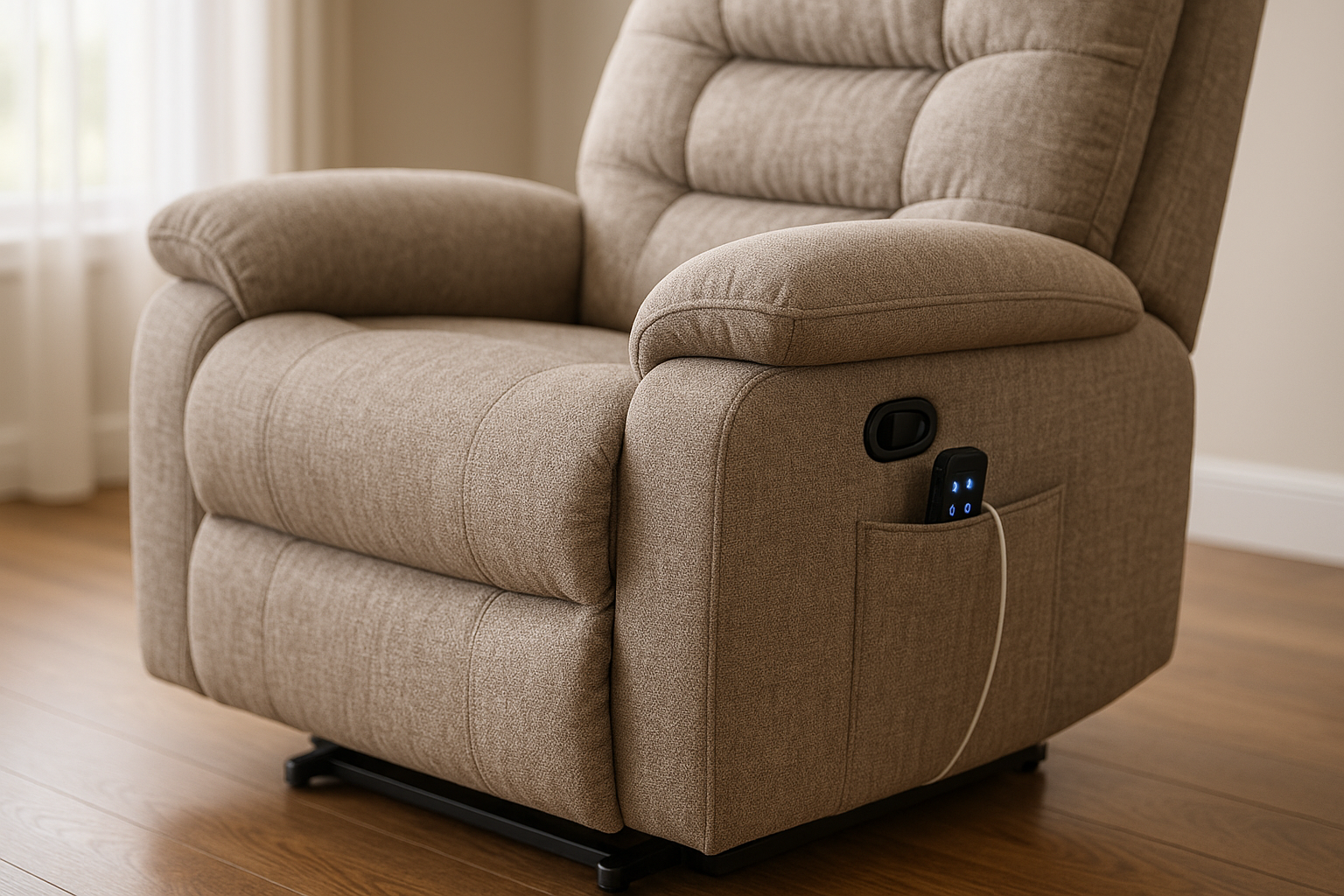

MCombo lift chair review: Therapist Perspective, Summary & Buying Guide
If you’re looking for an MCombo lift chair review that goes beyond product-page bullet points, this therapist-led video is a useful place to start. In the short review from JD The OT Product Reviews, the creator focuses on what actually matters in daily use: assembly, comfort, stand-assist range, remote visibility, storage pockets, and whether the recliner feels practical for someone with limited mobility.
This article turns that quick demo into a buying guide you can actually use in 2026. You’ll get the key timestamps, a therapist-informed view of transfer support, a durability checklist, maintenance advice, and a brand comparison framework for shopping smarter. For the original source, watch the review here: MCombo Power Lift Recliner Chair Review from a Therapist’s Perspective.
The creator explains that the chair was “extremely easy to put together” and highlights practical features early, which matters if you’re buying for a senior, a caregiver, or your own home setup. That combination of usability and mobility support is what makes this review worth breaking down in detail.

TL;DR — MCombo lift chair review Key Takeaways
Quick verdict: this MCombo lift chair review is positive for the reasons many buyers care about most. The creator explains that the chair is easy to assemble, looks durable, and offers meaningful help for standing from a seated position, especially between 00:05 and 00:20. That’s a strong first impression for a product aimed at seniors and people with mobility limitations.
Top specs to scan: the video shows 2 cup holders, side pockets, USB ports, and a light-up remote between 00:10 and 00:40. Those aren’t flashy extras. They’re quality-of-life details that can make a recliner easier to use every single day, especially when you don’t want to reach far for a phone, charger, or remote.
Who should keep reading: caregivers, occupational and physical therapy-minded shoppers, seniors with arthritis, and anyone comparing lift chairs for home use. As demonstrated in the video, the stand-assist range and arm support are especially relevant for transfer safety.
- Comfort: deep recline plus usable arm positioning for sit-to-stand support.
- Safety: visible remote lighting and strong lift range may help with safer transfers.
- Durability: the creator comments that the material looks like it will “stand the test of time.”
- Value: cup holders, storage pockets, and USB charging add convenience without moving into premium pricing tiers.
Watch the original review: YouTube video.
Quick specs snapshot (what the video shows)
If you only want the shopping essentials, the video provides a concise feature tour. At 00:02–00:12, the creator says the chair was “extremely easy to put together,” which suggests low assembly complexity and a user-friendly instruction set. At 00:12–00:20, he comments that the material looks like it will hold up well over time. Then between 00:20 and 00:40, the demo highlights convenience features: cup holders, side pockets, accessible power connection, USB ports, and a remote with illumination.
The visible feature count is straightforward and useful for comparison shopping: 2 cup holders, side pockets, and USB ports. Around 00:45, the lift function appears to provide enough forward rise for near full arm extension during stand-up assistance, and by 00:50–00:58 the chair also shows a substantial recline for rest.
| Feature | Observed in video |
| Assembly | Described as extremely easy, 00:02–00:12 |
| Material impression | Looks durable, 00:12–00:20 |
| Cup holders | 2 visible, 00:20–00:30 |
| Storage | Side pockets shown, 00:20–00:30 |
| Power/plug access | Easy to access, 00:22–00:26 |
| USB ports | 2 visible on side, 00:30–00:36 |
| Remote | Lights up, 00:32–00:36 |
| Lift/recline range | Strong stand-assist and deep recline, 00:45–00:58 |
Before buying, compare what’s shown here against the seller’s official specs page and the source video. Use both links side by side: video review and the manufacturer’s current product listing for the exact model you’re considering.
Why a therapist's perspective matters for lift chairs
A lot of lift chair reviews focus on color, price, and whether the cup holders look nice. That’s not enough if transfers are the real reason you’re shopping. According to JD The OT Product Reviews, the value of this chair isn’t just comfort; it’s how the power lift and arm position may support daily independence. That therapist angle matters because safe standing mechanics can affect fall risk, caregiver strain, and whether a chair helps or hinders functional mobility.
The creator explains this best around 00:40–01:00, where he points out that the chair gets “good range” to help someone stand and that he can get full extension of the arms. As demonstrated in the video, that observation is more clinically useful than a generic “power lift” label because it speaks to how a user may actually push through the armrests during a transfer.
There’s broader context too. The U.S. aging population keeps growing, and mobility limitations rise with age. Recent federal reporting has shown that a substantial share of older adults live with difficulty walking or climbing steps, and transfer support remains a major concern in home safety planning. Caregiver burden data also consistently show that assistance with transfers is one of the more physically demanding tasks in the home. That’s why a small quote in this video — “I loved how it had two cup holders…” at 00:20 — matters less clinically than the standing-range demo, even though both affect daily usability.
If you’re buying for a parent, spouse, or patient, prioritize transfer mechanics first, convenience second, and décor third. That order saves money and frustration.

Design, materials, durability and fabric options
At 00:12–00:18, the creator says the material “looks like it’s going to stand the test of time.” That’s a fair visual impression, but you shouldn’t stop there. When you’re buying lift chairs, appearance and actual upholstery durability are not the same thing. Ask the seller for the fabric abrasion rating — either Martindale or double rub count. If the seller can’t provide it, that’s a warning sign.
For home recliners, upholstery durability often falls somewhere around 15,000 to 50,000 double rubs, depending on material and market segment. In practical terms, a frequently used lift chair in a living room may last about 3 to years before the upholstery shows meaningful wear, while a sturdier frame may outlast the fabric. Warranties often reflect that reality: the frame may be covered longer than the motor, and the fabric may have the shortest protection of all.
When you compare fabric options, ask these exact questions:
- What is the abrasion rating?
- Is the fabric stain-resistant or moisture-resistant?
- Can I use a water-based cleaner, or do I need a special upholstery code cleaner?
- Is peeling or cracking excluded from the warranty?
Design style also affects perceived value. A modern chair may blend better with minimalist décor, a traditional style may feel warmer in family rooms, and leather-like or faux-leather options can look upscale but may feel hotter and show wear differently over time. If the chair is going in a visible living area rather than a bedroom, color and silhouette matter more than many buyers expect.
In our experience reviewing mobility aids, the best strategy is simple: choose the most durable fabric your space and budget can tolerate, then add a washable arm-cover or seat protector from day one.
Comfort, adjustability and health benefits — MCombo lift chair review
This part of the MCombo lift chair review is where the demo becomes genuinely useful. Around 00:45–00:00:55, the creator explains that the chair gives enough rise to help with standing and allows full arm extension. Around 00:50–00:58, the recline appears deep enough for resting. Those two functions — sit-to-stand assistance and rest positioning — are what separate a mobility aid from an ordinary recliner.
According to JD The OT Product Reviews, that arm extension matters because many users don’t stand with leg strength alone. They use a mix of trunk lean, hand pressure, and controlled forward momentum. A chair that elevates too little can still leave you “stuck.” One that rises smoothly and positions your body forward can reduce strain on knees and hips.
Here’s how to test comfort before buying:
- Check seat height: sit fully back with feet flat. Your knees should be close to degrees, not sharply above your hips.
- Check seat depth: you should have about 1–2 inches between the seat edge and the back of your knees.
- Test transfer mechanics: stand up with the chair flat, then with the lift engaged, and compare effort.
For arthritis or hip discomfort, a slight recline with feet elevated often reduces pressure during rest periods. For longer sitting, avoid sinking too far into a soft seat because it can make standing harder later. Common pressure points for seated older adults include the sacrum, buttocks, and heels, which is why position changes matter during the day.
As demonstrated in the video, this chair appears best suited for someone who needs practical home comfort with transfer help, not just a nap chair. That distinction matters.
Power lift mechanism, remote controls and safety features
The video’s strongest functional takeaway may be the lift range itself. The creator says at about 00:40 that “the chair does get some good range to help stand up,” and that’s the right way to frame the feature: as a practical observation, not a lab claim. You still need to verify the manufacturer’s rated weight limit, motor type, and electrical safety details before ordering.
Typical residential lift chairs often fall in the 300–450 lb capacity range, though larger models can exceed that. You should also ask whether the base includes anti-tip design features, whether there’s any emergency battery backup option, and whether the motor keeps a steady speed under load. Around 00:32–00:36, the remote lights up, which is a simple but meaningful safety feature for low-light use.
Use this 3-step testing process in-store or during a home trial:
- Check smoothness: run the chair from seated to raised and back down. Listen for grinding, jerking, or hesitation.
- Measure lift time: use your phone timer. A smooth, consistent rise is usually more important than raw speed.
- Test hold under load: sit in the chair and pause midway. It should feel stable, not shaky or drifting.
Also inspect the plug location. As demonstrated in the video at 00:22–00:26, easy access matters because awkward cord placement can create both tripping hazards and cleaning headaches. Safety features aren’t just about electronics. They include how the chair fits into your room and daily routine.
Controls, connectivity, pockets and accessories
Convenience features can sound minor until you live with a chair every day. In this video, the creator highlights several that are genuinely useful: 2 cup holders, side pockets, 2 USB ports, and a light-up remote. There’s also mention of an included cushion visible on the table nearby, which adds a little setup flexibility for positioning or added support.
At 00:30–00:36, the remote lighting and USB ports get attention. That matters more than it seems. For many older adults, small black buttons on a dark remote are annoying at best and unusable at worst. A lit control can make nighttime adjustments easier and may reduce fumbling. USB charging on-chair also helps keep a phone or alert device nearby, which supports independence.
To make these features work safely, follow a few setup rules:
- Route the power cord along a wall and secure slack with clips, not tape that peels up.
- Store the remote in the same pocket every time so it’s easy to find during transfers.
- Add silicone cup-holder liners if spills are likely.
- Use a washable arm or seat cover if the chair will be used for meals or daily lounging.
If you’re considering upgraded features, heat and massage options on similar recliners often add roughly $100–$400 depending on the brand and sales cycle. Battery backup accessories may also be available on some models, which is worth checking if power outages are a concern in your area.
Real-life use cases, video demonstrations and user testimonials
One reason this review stands out is that it actually shows the chair in use. The creator explains the quick assembly at 00:02–00:12, points out easy plug access at 00:22–00:26, demonstrates the remote at 00:30–00:36, and shows the stand-assist range at 00:45–00:55. That sequence gives you more practical information than many written reviews do.
According to JD The OT Product Reviews, this type of chair makes sense in at least three common situations:
- Independent senior with arthritis: the lift can reduce effort from painful knees or hips during standing.
- Caregiver-assisted transfers: the rise angle may reduce how much pulling or lifting a caregiver has to do.
- Living room or bedroom use: storage, charging, and recline depth may matter differently depending on where the chair lives.
As demonstrated in the video, the chair appears practical for daily living, not just occasional use. Before buying, measure seat height, seat depth, doorway width, wall clearance, and floor clearance. Those numbers affect whether the chair works in your home and whether your feet contact the floor safely.
When you ask owners for testimonials or feedback, use prompts that get real answers:
- How often did you need maintenance or repairs?
- Has it reduced transfer effort for you or your caregiver?
- Does the fabric still look good after 6–12 months?
We’ve found that those questions uncover far more than star ratings alone. They reveal how the chair performs once the excitement of delivery day is over.
Brand comparison and best lift chairs (how MCombo stacks up)
A good brand comparison should compare function before style. MCombo competes largely on value features — the video shows USB charging, pockets, cup holders, and a useful lift range — while some competing brands lean harder into premium upholstery, longer warranties, or heat and massage packages. If you’re shopping the best lift chairs, use a repeatable framework: motor performance, weight capacity, warranty length, design styles, parts support, and total price.
Here’s a simple 4-row comparison framework you can use while shopping:
| Brand | Typical strengths |
| MCombo | Value pricing, USB ports, pockets, common online availability |
| Ashley | Mainstream furniture styling, wide retail presence |
| Pride Mobility | Mobility-focused lineup, strong dealer network in some markets |
| Golden Technologies | Therapeutic positioning options, premium and bariatric choices |
Choose a budget-friendly model when you need core lift-and-recline function, acceptable upholstery, and quick delivery. Choose a more established mobility brand when you need local service, replacement parts, specialty sizing, or advanced positioning. The smartest move? Ask the seller two direct questions: “Can I get spare parts in years?” and “Who handles warranty labor locally?”
Use the original video as one input, not the only one: watch the review. For broader aging and independence context, the home and aging resources at NIA are useful for planning around mobility changes, even if your actual product decision comes down to pricing and support.
Care, maintenance, warranty and longevity
Competitor reviews often stop at “easy to assemble” and never tell you how to keep a lift chair working. That’s a mistake. Daily-use recliners collect body oils, crumbs, pet hair, and dust around the mechanism. Over time, that affects both appearance and performance. If the material truly “looks like it’s going to stand the test of time,” as the creator says at 00:12, you should verify that claim with written warranty coverage and routine care.
Use this maintenance schedule:
- Weekly: wipe high-touch surfaces, vacuum seams, and check cup holders and pockets for spills.
- Monthly: inspect electrical connections, look for cord wear, and confirm the remote cable isn’t pinched.
- Every 6–12 months: inspect bolts, frame joints, and moving sections for looseness or unusual noise.
- Annually: review the manual for motor or actuator service guidance and schedule service if movement has changed.
Warranty terms vary, but a common pattern is 3–10 years on the frame and 1–3 years on the motor or electrical components. Upholstery coverage is often more limited. Register the product as soon as it arrives, save the serial information, and take photos of any damage within hours of delivery.
For seasonal care, keep the chair away from direct sun, maintain moderate indoor humidity, and don’t let cords sit where robot vacuums or foot traffic can catch them. Small habits extend lifespan more than most buyers realize.
Buying guide: price ranges, seating capacity, weight limit and home décor
Before you buy, slow down and measure first. The best lift chairs fail in real homes for simple reasons: they don’t fit through the doorway, the seat is too deep, the footrest blocks traffic, or the weight limit doesn’t match the user. Start with your body and room, not the sale banner.
For 2026 shopping, rough price bands often look like this:
- Budget: $300–$700 for basic lift/recline, simpler upholstery, and fewer advanced features.
- Mid-range: $700–$1,500 for better cushioning, improved fabrics, and more convenience options.
- Premium: $1,500+ for specialty positioning, stronger dealer support, upgraded styling, and sometimes bariatric capacities.
Added features such as heat and massage can shift the price upward, often by $100–$400 or more. Seating capacity and weight limit are separate issues from overall size, so verify both. A wider chair doesn’t automatically mean a higher safe lifting capacity.
Use this buying checklist:
- Measure seat height, room footprint, doorway width, and recline clearance.
- Test in person if possible, or confirm the return policy before delivery.
- Verify warranty coverage, parts availability, and service options.
- Read user reviews and watch video demos, including this therapist review.
The creator’s observation at 00:45 about arm extension helping a person stand is especially relevant for caregiver support. If a chair reduces manual lifting during transfers, that can lower daily strain and make home care more sustainable.
FAQ — People Also Ask (quick answers)
Below are the most common questions buyers ask when comparing recliners, mobility aids, and lift chairs for home use. If you want a quick visual reference before deciding, you can also watch the original video or explore broader aging resources at NIA.
These quick answers work best when paired with exact model specs from the seller. Features, weight limits, and warranty terms can vary even within the same brand.
Appendix: timestamps, quotes and links for sourcing
- 00:02–00:12 — Assembly: “extremely easy to put together”
- 00:12–00:20 — Material: “looks like it’s going to stand the test of time”
- 00:20–00:30 — Storage and drink holders: “I loved how it had two cup holders and some nice side pockets”
- 00:22–00:26 — Power connection: plug location described as easy to access
- 00:30–00:36 — Remote and charging: remote lights up, USB ports shown
- 00:40 — Lift observation: “the chair does get some good range to help stand up”
- 00:45–00:55 — Transfer support: full arm extension helps someone get out of the chair
- 00:50–00:58 — Recline depth: extends far back for resting
Source links
Editorial reminders used in this article: “the creator explains,” “as demonstrated in the video,” and “according to JD The OT Product Reviews.” Current-year references should be framed around pricing or buyer expectations in 2026.
Bottom line and next steps
If you’ve read this far, the main point is pretty clear: this chair looks strongest as a value-focused home lift recliner with practical convenience features and a therapist-approved emphasis on standing assistance. The video doesn’t pretend to be a lab test, but it does show the details that matter in real homes — easy assembly, accessible power, visible controls, storage, and a lift angle that appears useful for transfers.
Your next step should be simple. Watch the original demo, write down the exact measurements you need, confirm the weight limit and warranty, and compare the MCombo model against at least two alternatives before ordering. If you’re buying for a senior or a caregiver situation, prioritize transfer safety and fit ahead of cosmetic upgrades.
That’s the smartest way to use this MCombo lift chair review: as a screening tool. It helps you decide whether this recliner deserves a place on your shortlist, then finish the decision with hard specs, home measurements, and a return-policy check.

Frequently Asked Questions
Are lift chairs good for arthritis?
Yes, lift chairs can be very helpful for arthritis because they reduce how much force you need from painful hips, knees, and hands during sit-to-stand transfers. In this video, the creator demonstrates a strong front lift and notes at 00:45–00:58 that the chair gives enough range to help someone stand while also reclining far back for rest, which is useful when you need position changes through the day.
For best results, match the chair to your body size. A seat that’s too deep or too low can make arthritis pain worse, even if the power lift works well.
How much weight can lift chairs hold?
Most home power lift chairs are rated somewhere around 300 to pounds, though bariatric models can go higher. For the specific MCombo model shown in the video, you should confirm the exact manufacturer rating on the product page before buying because capacity varies by frame size and motor configuration.
Also check whether the listed weight limit applies only to static seating or to lifting motion too. That detail matters for safety and warranty coverage.
Do power lift chairs have a warranty and how long does it last?
Yes, many power lift chairs include a limited warranty, but coverage often differs by component. A common pattern is 1–3 years for the motor or electrical parts and 3–10 years for the frame, while upholstery may have shorter protection or only cover defects.
Before ordering, ask for the written warranty, confirm how claims are handled, and register the chair right away after delivery. Keep photos of the box label and your receipt in case you need service later.
Can lift chairs fit through doorways?
They often do, but you need to measure carefully before delivery day. Check your doorway width, hallway turns, stair clearance, and the final room footprint, then compare those numbers with both the assembled size and the carton dimensions.
If access is tight, ask whether the chair ships in multiple pieces, since many lift recliners have backs and bases that connect separately. That can make second-floor or narrow-entry installation much easier.
How do you know if a lift chair fits your body and room?
Start with a simple home trial. Measure seat height from floor to cushion top, sit all the way back, place your feet flat, and see whether your knees land near a 90-degree angle; then test whether you can stand with minimal push from your arms.
If you’re shopping online, use video reviews like this one, check the return window, and ask the seller for seat depth, seat width, wall clearance, and full recline length. Those four numbers prevent a lot of buying mistakes.
Key Takeaways
- The video shows strong day-to-day value: easy assembly, cup holders, side pockets, USB ports, and a light-up remote.
- The therapist perspective matters because the most useful feature appears to be the lift range and arm positioning that may help with safer sit-to-stand transfers.
- Before buying, verify exact weight limit, warranty terms, upholstery durability specs, room clearance, and doorway fit for the specific MCombo model.
- MCombo appears competitive as a value option, but you should still compare service support, parts availability, and return policies against larger mobility brands.
- For seniors and caregivers, the right lift chair is less about extras and more about fit, transfer mechanics, comfort, and long-term maintenance.