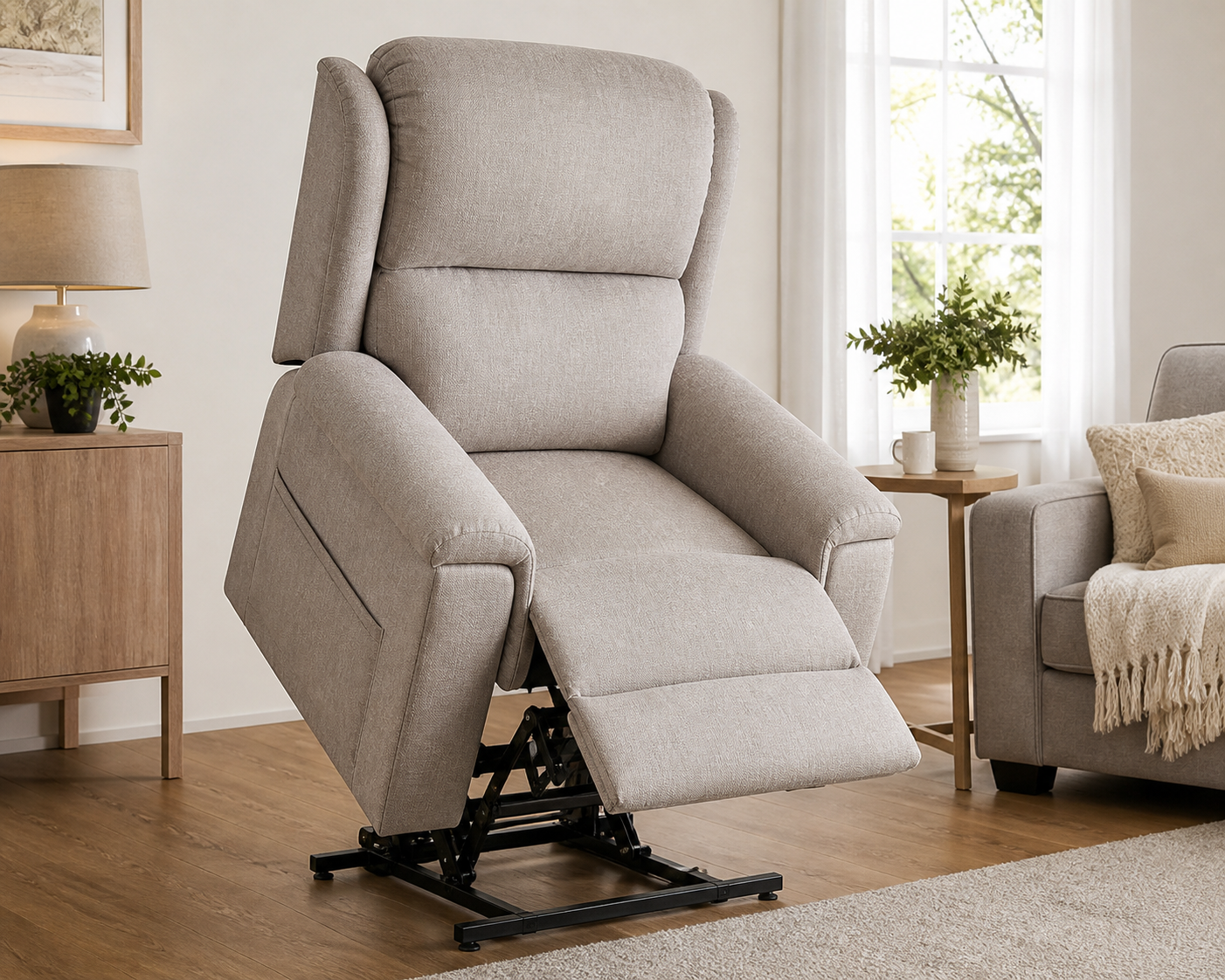
Power lift recliner cost: prices, features, and the right chair for your needs
The power lift recliner cost can vary widely. In the opening of the Elder Care Support Network video, the creator frames price as a result of chair type, lifting mechanism, upholstery, weight capacity, features, warranty, and after-sale support. The video is brief and provides no detailed timecodes beyond 00:00, so this article expands that cost question into a practical buying plan for 2026.
As a starting point, compare three broad categories: basic single-motor lift chairs, mid-range dual-motor power lift recliners, and specialized floor lift chairs or patient transfer chairs. The first category usually provides straightforward sit-to-stand assistance. Dual-motor models offer more independent back and footrest positioning, while floor-lifting equipment is designed for a much more demanding problem: helping someone recover from the floor.
Do not compare sticker prices alone. Add delivery, assembly, battery replacement, an extended warranty, replacement remote controls, upholstery protection, repairs, and possible in-home service. According to the creator, differences between models matter because a low-priced chair that does not fit the user may create failed transfers and extra caregiver work.
The central buying question is simple: does the user need ordinary seating and standing assistance, or does the user need lifting from the floor and full transfer support? That distinction often matters more than a small difference in the power lift recliner cost.

TL;DR: Key takeaways before you buy
The most useful conclusion from the video’s cost-focused introduction at 00:00 is that price should follow need, not lead it. A traditional chair is mainly a seat and sit-to-stand aid; a floor lift chair is intended to raise someone from the floor and may serve as a transfer aid or limited wheelchair alternative.
- Measure first: record the user’s body dimensions and the room, doorway, recline path, and walking route.
- Confirm capacity: check both the manufacturer’s weight rating and usable seat dimensions.
- Choose the lift height: the seat must support stable foot contact during standing.
- Check backup power: ask whether a rechargeable battery is included and how manual lowering works.
- Read the terms: verify delivery, return, sanitation, warranty, labor, and replacement-parts policies.
In 2026, the cheapest power lift recliner cost may be misleading if the chair increases fall risk or forces a caregiver to lift awkwardly. Obtain a professional assessment if the user has repeated falls, weakness, cognitive impairment, pressure-injury risk, or needs hands-on transfers.
Use this quick rule: select a recliner for everyday seating and standing assistance; investigate a floor lift chair, transfer chair, or another mobility aid when recovering from the floor is a recurring concern. The creator’s practical message is that understanding the job the chair must perform is the first step in judging its value and power lift recliner cost.
Traditional power lift recliners vs. floor lift chairs
A power lift recliner, electric lift chair, or lift assist device uses a motorized mechanism to tilt and raise the seat. This helps an elderly user or senior move from sitting toward standing with less knee, hip, and trunk effort. As the video explains at 00:00, that basic function is the starting point for understanding the product category, but not every lift chair solves the same mobility problem.
| Feature | Traditional lift recliner | Floor lift chair |
|---|---|---|
| Primary use | Seating and sit-to-stand assistance | Floor recovery and transfer support |
| Lift height | Raises from a normal seated position | May rise from a low or near-floor position |
| Reclining function | Usually central to the design | May be limited or secondary |
| Portability | Often heavy and room-based | May include wheels, handrails, or foldable design |
| Caregiver involvement | Often supervision or light assistance | May require trained caregiver support |
A traditional chair generally cannot lift a person from the floor. A floor lift chair may use a low profile, wheels, handrails, suction cups, a T-stabilized base, or a foldable frame. These features can improve floor recovery, but they also affect stability, capacity, storage, and power lift recliner cost.
Do not assume a floor lift chair is a wheelchair replacement. It may be hard to propel, unsuitable on ramps or uneven surfaces, and unable to provide the positioning support needed for continuous mobility. An independent senior who struggles only with standing may fit a traditional chair. Someone who frequently falls and cannot rise without help needs a clinical assessment and possibly a floor-lifting patient transfer chair, not simply a more expensive recliner. That use-case difference can change the power lift recliner cost substantially.

Features that raise or lower power lift recliner cost
Motor design is one of the clearest price differences. A single-motor chair commonly moves the back and footrest together, while a dual-motor system lets you adjust them more independently. Dual motors may improve positioning for sleeping, swelling, or comfort, but they also add electronics and potential repair points, which can increase power lift recliner cost.
Remote controls should be evaluated for usability, not appearance. A wired remote is difficult to misplace; a wireless handset is convenient but needs a secure storage location. Ask whether the rechargeable battery is included, how long it takes to charge, how many lift cycles it supports, and whether manual emergency lowering is possible when both household power and battery power are unavailable.
Construction features can be valuable when they match the user’s needs. Waterproof construction and stain-resistant upholstery help with continence concerns. Reinforced frames support higher capacities. Seat belts, handrails, suction cups, and a T-stabilized base may improve positioning or floor stability, but a safety accessory can become an obstruction if the user cannot release it independently.
Wheels, a foldable design, and portable lift chair construction help caregivers move or store equipment. Portability can trade off against seat width, weight capacity, and stability. Following the cost priorities discussed by Elder Care Support Network, rank features in this order:
- Safety and fit: capacity, stable base, seat dimensions, and safe lift height.
- Lifting performance: motor strength, smooth travel, and emergency lowering.
- Comfort and convenience: upholstery, USB ports, heat, cup holders, and storage.
Before paying more, ask whether each extra feature reduces a real risk or merely adds decoration to the power lift recliner cost. The same checklist helps you avoid paying for a feature the user cannot safely operate.
How to choose the correct size and weight capacity
Correct sizing is a safety issue, not a comfort preference. To compare a chair properly, record the user’s weight, hip width, seated knee-to-floor height, lower-leg length, shoulder height, and the available chair footprint. Then compare those measurements with the manufacturer’s usable seat dimensions, not just the outside width listed in a catalog.
- Measure hip width while the user wears normal clothing, allowing modest clearance without creating side-to-side instability.
- Measure seat depth from the back of the pelvis to the knee crease; a petite user may need a shorter seat.
- Measure knee-to-floor height with feet flat; this helps match the lift height.
- Check back height and shoulder support, especially if the user reclines for long periods.
- Confirm that the weight rating exceeds the user’s weight and covers clothing, cushions, and movement loads.
A chair can meet its weight rating and still be unsafe if the seat is too wide, the lift height is wrong, or the feet do not contact the floor during transfer. Larger users may need a bariatric frame and reinforced lifting mechanism; smaller users often need a petite model with reduced seat depth. Recline angle also matters for breathing, swelling, comfort, and pressure distribution.
For room fit, measure doorway width, wall clearance, carpet thickness, turning space, and the route to the bathroom or bedroom. Wall-hugger chairs need less rear clearance, but you must follow the manufacturer’s minimum. The power lift recliner cost may rise for a better-fitting model, yet a poor fit can make the chair unusable and increase transfer risk.
Request a seating or occupational therapy assessment for severe balance problems, contractures, unusual body proportions, or pressure-injury risk. Spending time on measurements before ordering is one of the most reliable ways to control power lift recliner cost and prevent returns.
Safe operation, transfers, and fall recovery
A powered chair still requires a safe procedure. The video offers only a general introduction at 00:00, so use the following demonstration plan before regular use:
- Inspect the chair, cords, joints, footrest, and surrounding floor for damage or obstacles.
- Place it on a level surface and engage brakes or stabilize the base where applicable.
- Connect power, charge the backup battery, and test the remote control.
- Raise and recline the empty chair through its full range.
- Center the user, check foot placement, and keep clothing, hands, and pets away from moving gaps.
For sit-to-stand assistance, raise the chair until the user’s feet are firmly on the floor. Have the user use the handrails or armrests as designed, lean forward as instructed by a clinician, and rise without pulling on the remote, footrest, or caregiver’s neck.
For wheelchair transfers, lock the wheelchair brakes, position it close to the chair, remove obstacles, and use a gait belt only if you are trained. Never rely on the chair alone for a high-risk transfer. A low power lift recliner cost is not a substitute for caregiver training, a transfer board, or a second helper when required.
After a fall, clear the area and check for pain, bleeding, confusion, or possible head impact. Call emergency services when injury may be present, and do not manually lift the person from the floor. Use a properly rated floor lift chair only according to its instructions. Entrapment hazards include footrest joints, side gaps, cords, seat belts, and handrails. Repeated bending and lifting can injure a caregiver’s back even when the chair is powered, so the power lift recliner cost should be judged against the safety support it provides.
Room accessibility and small-space planning
Before delivery, draw a simple room-fit diagram. Mark the chair footprint, full recline path, lift path, doorway clearance, walking route, and space for a walker or wheelchair. Add the caregiver’s standing position and the route to the bathroom. This prevents a common mistake: measuring the chair but not measuring how the user will approach it.
Carpets, thresholds, loose rugs, and uneven flooring can affect wheels, suction cups, stability, and movement. Remove loose rugs, identify raised transitions, and ask the supplier whether the chair can cross the surface safely. A portable lift chair may move more easily than a heavy recliner, but wheels must lock reliably and the base must remain stable during lifting.
Wall clearance and power-cord placement deserve special attention. A wall-hugger design can help in a small room, yet it still needs room for the user, caregiver, footrest, and transfer equipment. Keep cords away from walking paths and emergency exits. A foldable model can be useful for storage, but confirm its folded dimensions, lifting weight, wheel-lock behavior, and whether it is intended only for indoor transport rather than outdoor travel.
On delivery day, move the chair through every doorway before final placement. Test full lift and recline, check that outlets are accessible, and keep an unobstructed exit route. These installation checks may add to the power lift recliner cost, but they are cheaper than a failed delivery or an unsafe room setup. A room that technically fits the chair may still fail if a walker cannot turn beside it.
Battery, maintenance, warranty, and long-term reliability
A rechargeable battery is useful during a power outage, but batteries are not interchangeable in performance. Identify the charging indicator, follow the manual’s charging instructions, and maintain a backup plan for outages. Repeated lifting, heavy users, and frequent recline cycles can reduce runtime, so never assume a battery supports the same number of cycles in every home.
Ask the seller for the battery’s expected cycle life, replacement price, charging time, included warranty, and storage instructions. Confirm whether the chair can be lowered manually if both mains power and battery power fail. The battery may be included in one package and an extra-cost accessory in another, which can make advertised power lift recliner cost figures difficult to compare.
Use this monthly maintenance routine:
- Inspect cords, plugs, connectors, and the remote.
- Test emergency lowering and the backup battery.
- Check bolts, moving parts, handrails, wheels, brakes, and suction cups.
- Clean spills promptly and inspect waterproof seams or upholstery.
- Listen for unusual motor sounds or uneven movement.
Read warranty terms by component. Frame, motor, electronics, upholstery, handset, and batteries may have different coverage periods. Parts may be covered while labor, shipping, or in-home service is excluded. Keep the model number, serial number, manual, supplier contact, and replacement-parts list together. According to Elder Care Support Network’s cost-focused message, after-sale support belongs in the purchase decision, not after it. A dependable service network can justify a higher power lift recliner cost when a failed motor would otherwise leave the user stranded.
Medicare, insurance, and ways to reduce the cost
Will Medicare pay for a lift chair? Medicare may cover certain medically necessary durable medical equipment components under specific conditions, but a standard power lift recliner is not automatically fully covered. Check the current rules with Medicare’s official lift chair coverage page, your Medicare Advantage plan, and a clinician rather than relying on a seller’s promise.
Documentation, a qualifying medical condition, an approved supplier, the covered component, and beneficiary cost-sharing can affect reimbursement. Coverage may not include the entire upholstered chair, and approval should be confirmed before purchase. Insurance policies also vary in whether they pay for delivery, accessories, repairs, or replacement batteries.
To reduce power lift recliner cost, take these steps:
- Compare two or three local medical-equipment suppliers.
- Request an itemized written quote separating chair, delivery, assembly, and accessories.
- Ask about refurbished units with documented inspection and repair support.
- Check nonprofit lending closets and community equipment exchanges.
- Avoid paying for accessories the user cannot safely use.
You may find a chair through an Area Agency on Aging, Medicaid waiver program, veterans’ benefits, a community disability organization, a hospital loan program, or a charitable equipment exchange. Availability and eligibility vary by location. Before accepting used equipment, confirm sanitation rules, return policies, repair support, measurements, and capacity. A donated chair that does not fit can create more expense than the power lift recliner cost of a suitable new model.
How to compare brands and build a final buying checklist
There is no universal best recliner brand. The right model depends on verified weight capacity, body fit, motor reliability, warranty length, replacement-part availability, local service, and transfer needs. As the creator explains, model differences—not just the headline price—shape the practical value of a lift chair.
| Item to compare | What to record |
|---|---|
| Price and delivery | Model price, assembly, shipping, and in-home service |
| Fit | Seat width, seat depth, lift height, back height |
| Performance | Weight rating, motor count, recline range |
| Safety | Battery backup, emergency lowering, seat belt, handrails |
| Construction | Waterproofing, wheels, suction cups, T-stabilized base |
| Ownership | Warranty, return terms, parts, and repair labor |
Ask sellers: Is the remote wired or wireless? Is a rechargeable battery included? Can the chair be lowered manually? Does it have a seat belt, handrails, wheels, suction cups, or a T-stabilized base? What happens if the motor fails? Written answers make power lift recliner cost comparisons more reliable.
Test the actual chair through at least five actions: sit down, stand up, recline, return upright, and transfer to a walker or wheelchair. A caregiver should observe from the side without pulling the user. Check whether the user can reach the handset, maintain foot contact, and clear the footrest safely.
Price matters, but a correctly sized chair with proper support can prevent failed transfers, caregiver strain, and an unsuitable purchase. That broader value should be included when you compare power lift recliner cost between brands.
Final decision: which chair fits the user’s need?
Use this decision tree. Choose a traditional power lift recliner when the user needs daily seating, comfortable reclining, and sit-to-stand assistance. Consider a floor lift chair when lifting from the floor is a recurring need. Seek professional guidance when the user has frequent falls, cannot follow instructions, needs hands-on transfer support, or has complex positioning needs.
Before purchase, confirm four non-negotiables: correct body fit, adequate weight capacity, safe room clearance, and a tested backup plan for power or equipment failure. A lift chair is one mobility aid among many. It may need to work alongside a walker, wheelchair, transfer board, commode, handrails, or caregiver training.
- Measure the user, including hip width, seat depth, lower-leg length, and knee-to-floor height.
- Measure the room, doorways, wall clearance, recline path, and equipment route.
- Obtain two or three written quotes with delivery and service separated.
- Confirm Medicare or insurance eligibility before ordering.
- Test lifting, reclining, transfers, emergency lowering, and battery backup.
- Review warranty coverage, labor exclusions, and replacement-parts terms.
The appropriate power lift recliner cost is the amount that buys a safe, usable solution—not simply the lowest advertised number. As demonstrated in the Elder Care Support Network video, understanding what the chair is designed to do is the first step toward judging whether its price is justified. That principle remains useful in 2026, especially when the choice affects both senior independence and caregiver safety.
For a final review, return to the video’s opening cost question at 00:00 and compare the proposed chair against the user’s actual need. If the chair cannot safely perform the required transfer, its power lift recliner cost is too high regardless of the discount.

Key Takeaways
- Compare the chair’s full ownership cost—including delivery, batteries, service, warranty, and replacement parts—rather than relying on the advertised price.
- Choose a traditional power lift recliner for everyday sit-to-stand assistance and investigate a floor lift chair when floor recovery or transfer support is the recurring problem.
- Measure the user and room before ordering, then verify usable seat dimensions, lift height, weight capacity, doorway clearance, and recline space.
- Prioritize safety and fit before comfort extras; test the remote, emergency lowering, battery backup, transfers, and full range of motion.
- Confirm Medicare or insurance rules, return terms, warranty exclusions, and local repair support in writing.
Frequently Asked Questions
Will Medicare pay for a lift chair for a senior?
Medicare may cover certain medically necessary lift-chair components when specific medical, documentation, and supplier requirements are met. It does not automatically pay for the entire upholstered power lift recliner, so verify current eligibility with Medicare, your plan, and a clinician before buying.
What's the difference between a recliner and a lift chair?
A standard recliner changes the back and footrest position but does not normally raise the user toward standing. A power lift chair tilts and elevates the seat to provide sit-to-stand assistance, while a floor lift chair is designed for recovering someone from a low or floor-level position.
What brand of recliners are the best?
No single brand is best for every user. Compare verified capacity, seat dimensions, motor reliability, emergency lowering, battery support, warranty coverage, replacement parts, return terms, and local service.
How can you get a lift chair for free?
Ask Area Agencies on Aging, Medicaid waiver programs, veterans’ benefit offices, nonprofit lending closets, hospitals, disability organizations, and charitable equipment exchanges. Availability varies, and you should confirm sanitation, fit, capacity, repair support, and return rules before accepting a used chair.
Do power lift chairs work during a power outage?
Some models include a rechargeable battery backup, while others require a separately purchased battery pack. Ask about runtime, charging time, replacement cost, and manual emergency lowering, and keep the chair’s instructions available for outages.